
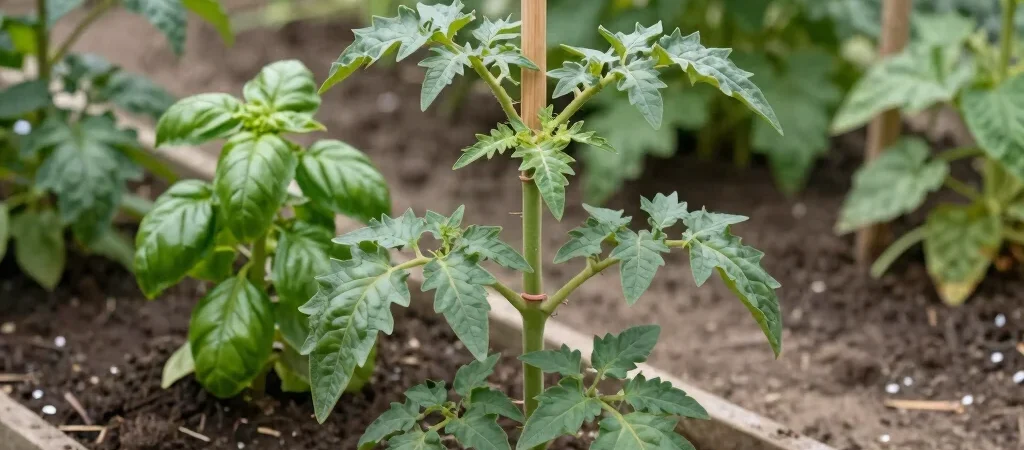
Every spring I make a garden plan that assumes I have more space, time, and patience than I do. Then the tomatoes arrive, the stakes go in, and suddenly the bed is a crowded tangle. This year I’m trying one tomato plant, with enough room around it to see the soil.
Make Space Before Planting
I used to fill every open patch with seedlings, as if bare soil meant I had forgotten something. But space makes it easier to reach the base of a plant, notice a curled leaf, or water without soaking everything nearby. I’ve left a clear path along one edge and tucked basil where I can brush past it.
Pay Attention in Small Doses
The garden is more satisfying when I spend a few minutes looking before I start pulling or pruning. I check whether the soil still feels damp below the surface, see which leaves have changed, and move a tendril back toward its support. None of that makes the bed impressive, but it helps me notice what is actually happening.
Leave the Plan Flexible
A small garden isn’t a lesser version of a bigger one; it’s a different arrangement of attention. If the tomato thrives, I’ll enjoy it, and if it doesn’t, there will still be basil to snip and soil to turn. I’m learning to plant for the space I have, not the imaginary garden I keep drawing in the margin.